
2026 Прикраси Adornments
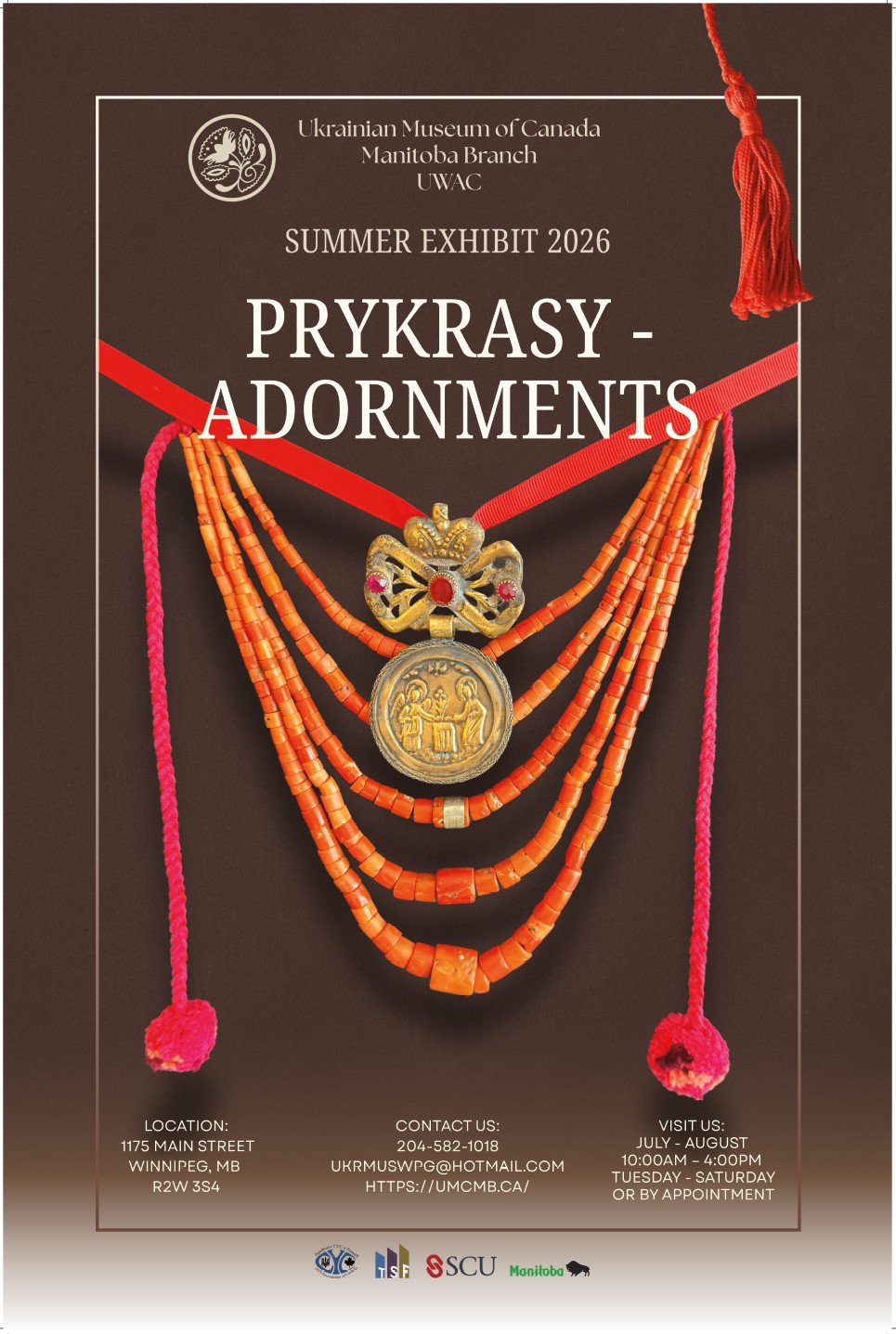
Welcome to a virtual preview of our 2026 Exhibit PRYKRASY-ADORNMENTS
Please note: you may use the Next and Previous buttons below for traversing the virtual exhibit.
The Ukrainian tradition of wearing jewellery, particularly korali (coral), is deeply rooted in a cultural practice where adornment carried symbolic, ritual and social meaning.
The number of strands of coral worn indicated a family’s prosperity and influenced a young woman’s marital prospects.
Ukrainian women knew how to adorn themselves.
Many of these adornments-prykrasy were more than just pieces of jewellery.
They were often valuable heirlooms passed from mother to daughter and generation to generation.
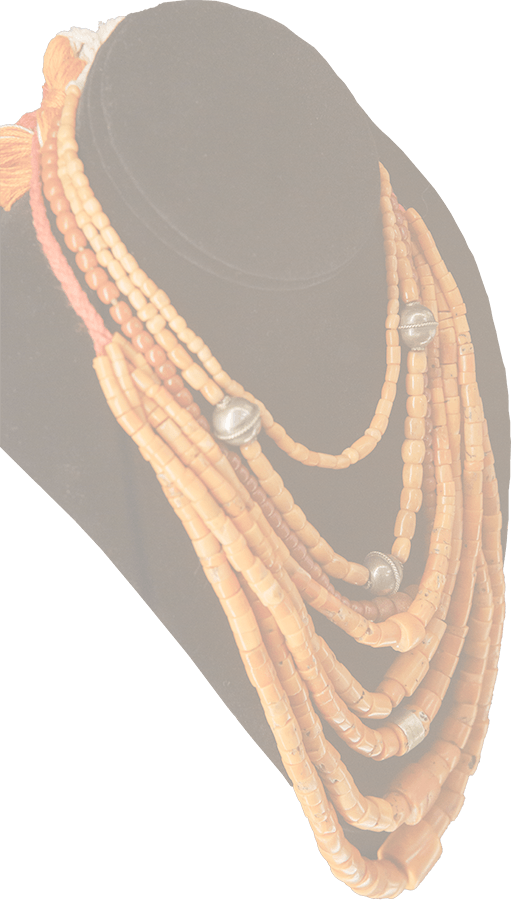
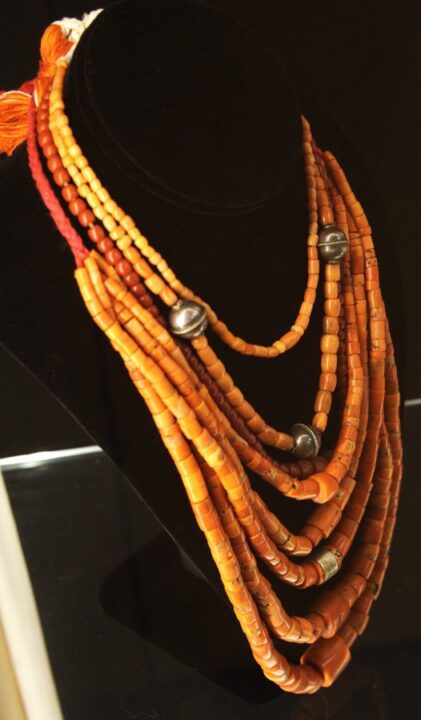
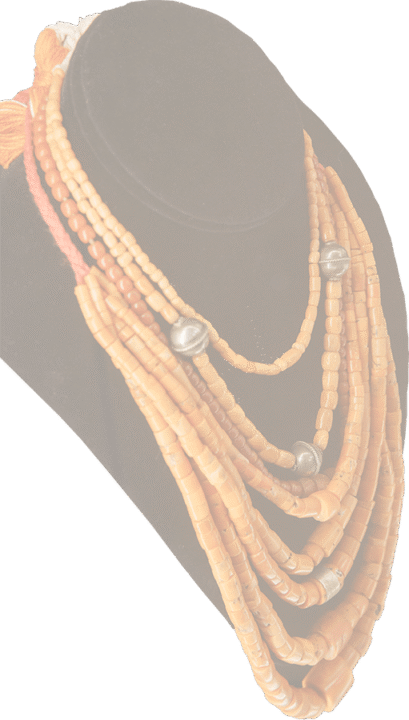
Silver ryfy on barrel-shaped coral beads, Lower Bug region, O. Berdnyk collection.
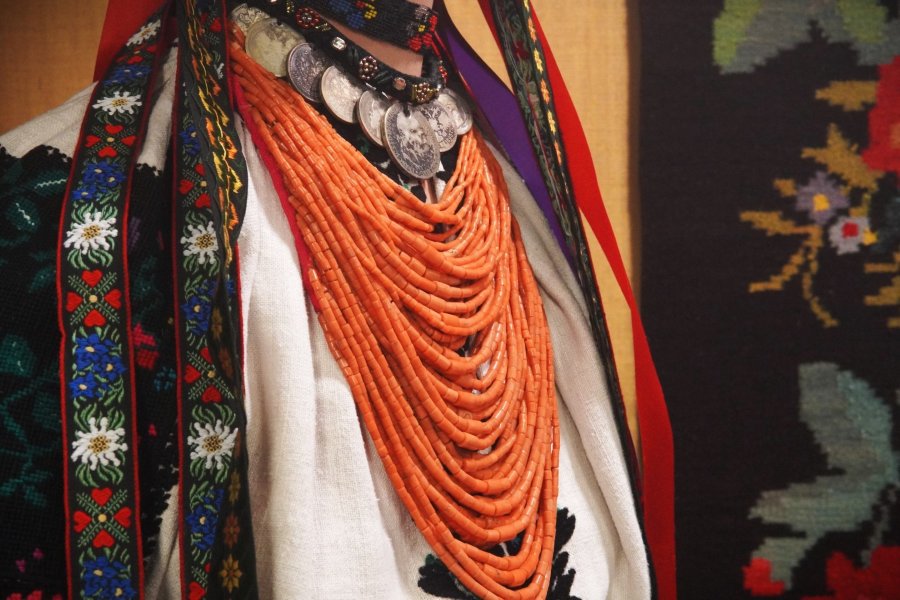
A part of our permanent collection is always on display highlighting apparel from three regions of Ukraine – Galicia or Halychyna, Bukovyna and Horodenka (Ivano-Frankivsk). Many of the first wave of Ukrainian immigrants arrived from these regions in western Ukraine before 1914.
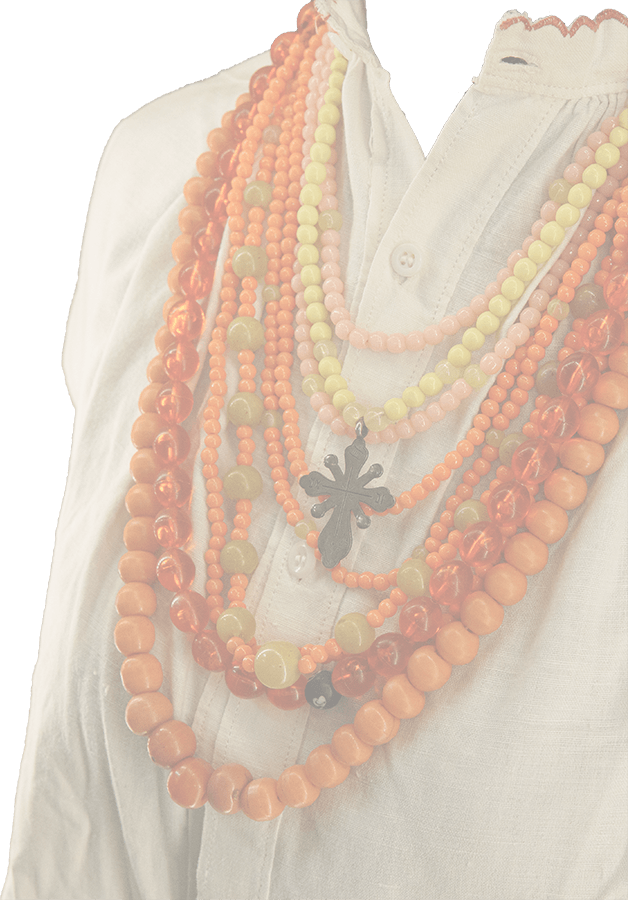
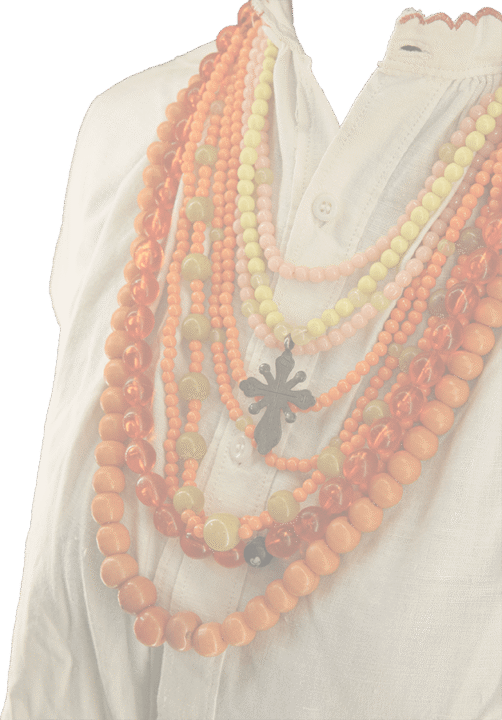
45 strand coral necklace on a mannequin wearing wedding apparel from the Halychyna region, Ukrainian Museum of Canada, Manitoba Branch collection.
KORALI
The most desired and commonly worn traditional necklaces in all regions of Ukraine were made of coral imported from the Mediterranean and the Red Seas and were known as korali.
Coral necklace from the O. Berdnyk collection.
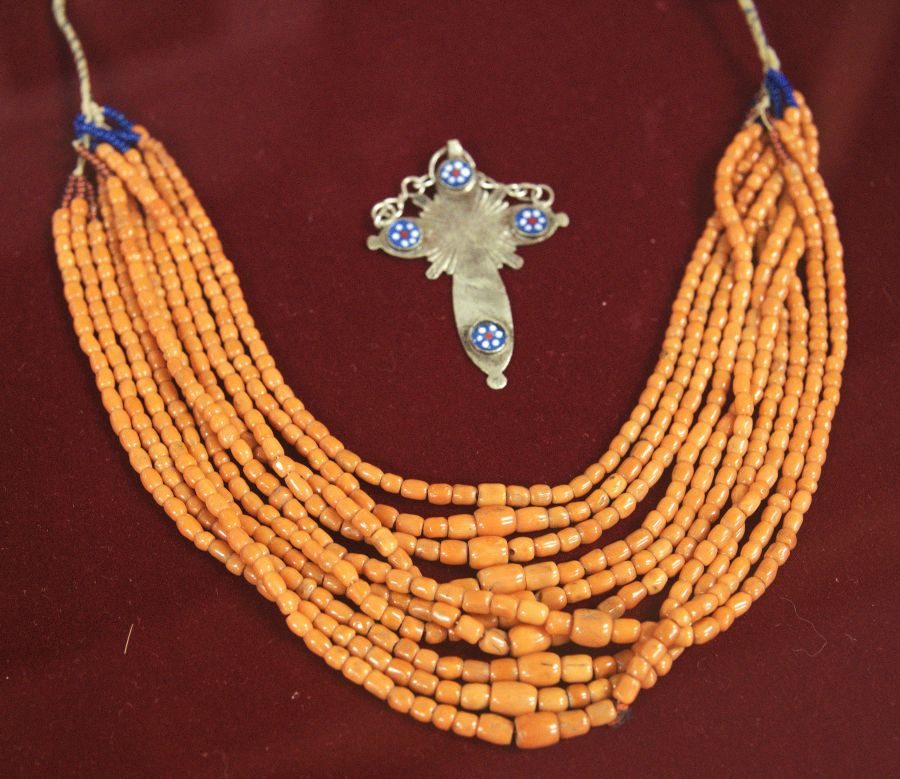
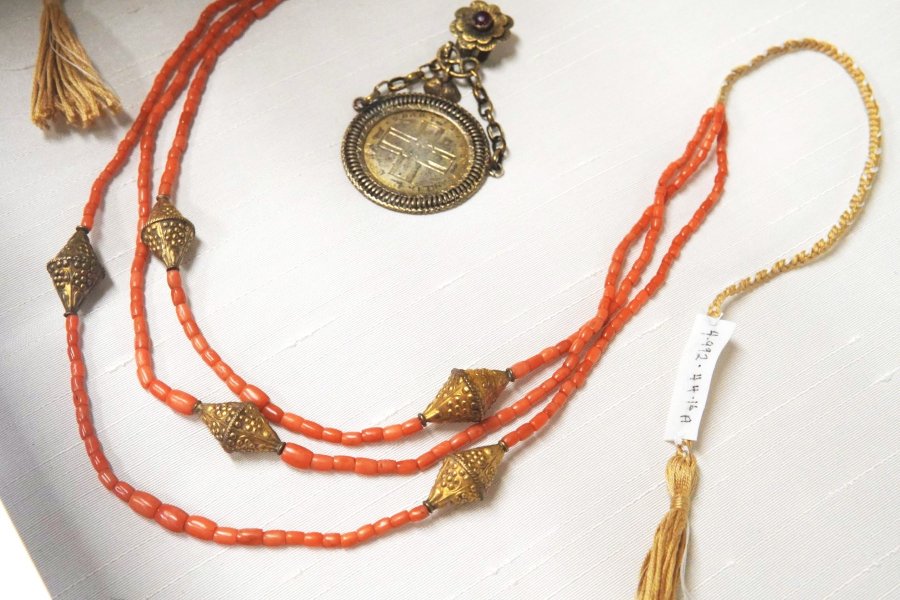
The value of the coral beads depended on their colour, quality, size and shape.
Beads were often complemented with silver or brass elements, pendants, decorative inserts – “puhvytsi”, “ryfy”, and sometimes silver coins or dukachi.
Coral with brass and dukach, O. Berdnyk collection.
DUKACH
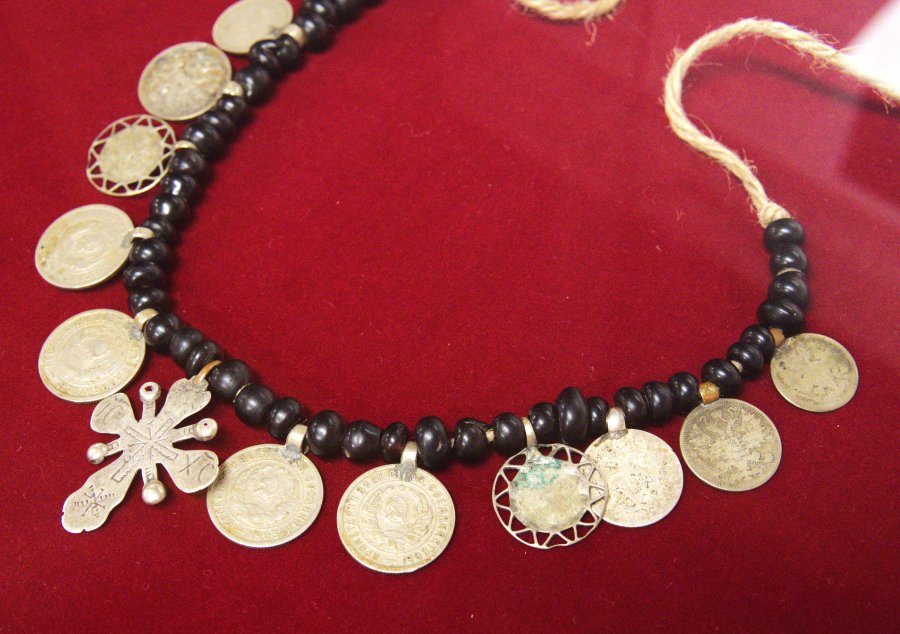
A “dukach” is a traditional Ukrainian metal medallion, worn on a ribbon or strung with beads. Dukach forms ranged from standard coin pendants to cross-shaped ornaments and were made from silver, brass, or gilded copper. Dukachi were crafted by skilled goldsmiths, “zolotari” who adapted forms and decorative elements according to regional aesthetics.
Hadyuche namysto with dukachi and cross, Middle Dnipro Region, O. Berdnyk collection.
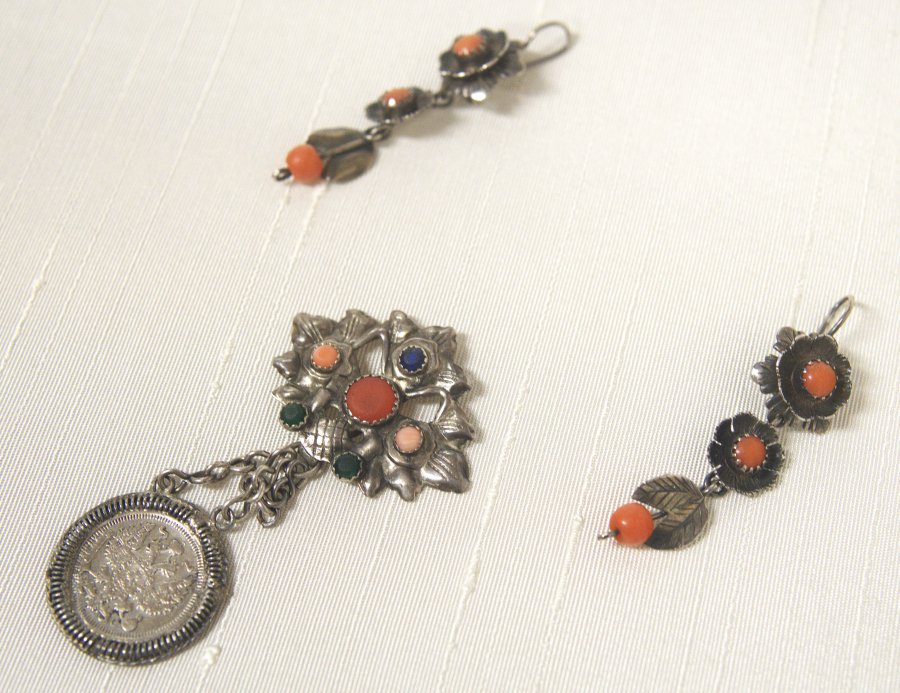
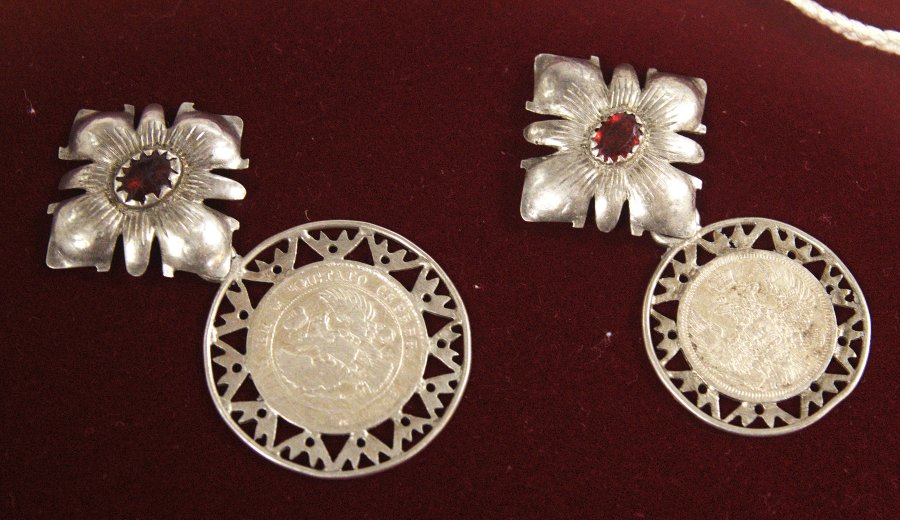
EARRINGS AND DUKACHI
Ukrainian women wore a wide range of earrings (kulchyky, serezhky) shaped as birds, flowers, crescents and crosses.
Earrings were worn from early childhood and remained part of their dress into old age.
Earrings were often designed in the same style as dukachi.
Left: Earrings and dukach. Right: Earrings, O. Berdnyk collection.
RING AND BRACELET
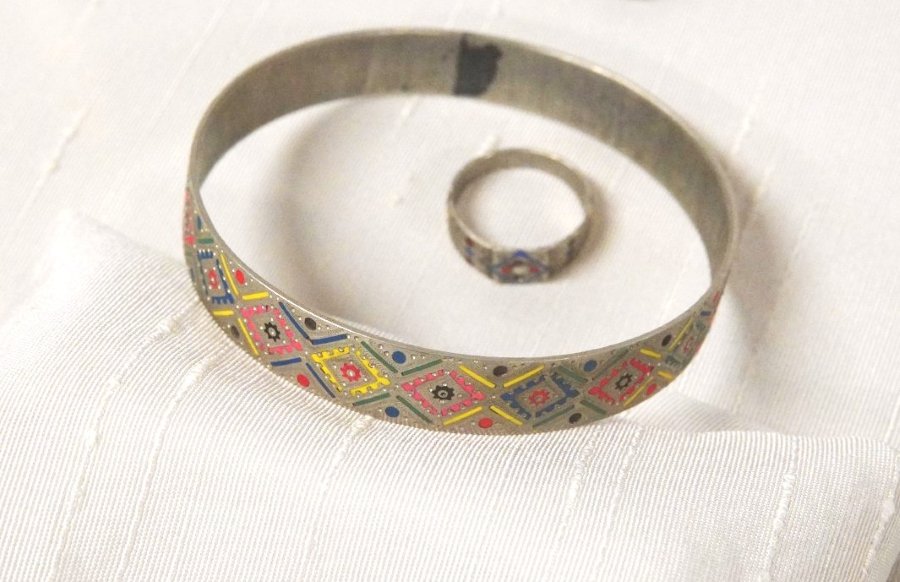
Traditional Ukrainian rings – known as persteni, perstenyky or perstentsi- were typically made of silver or brass using casting, engraving and inlay techniques.
Silver ring and bracelet, made in the Hutsul Region of Ukraine, Manitoba Branch collection.
NECKLACE ADAPTATIONS:
SMALT AND MORE
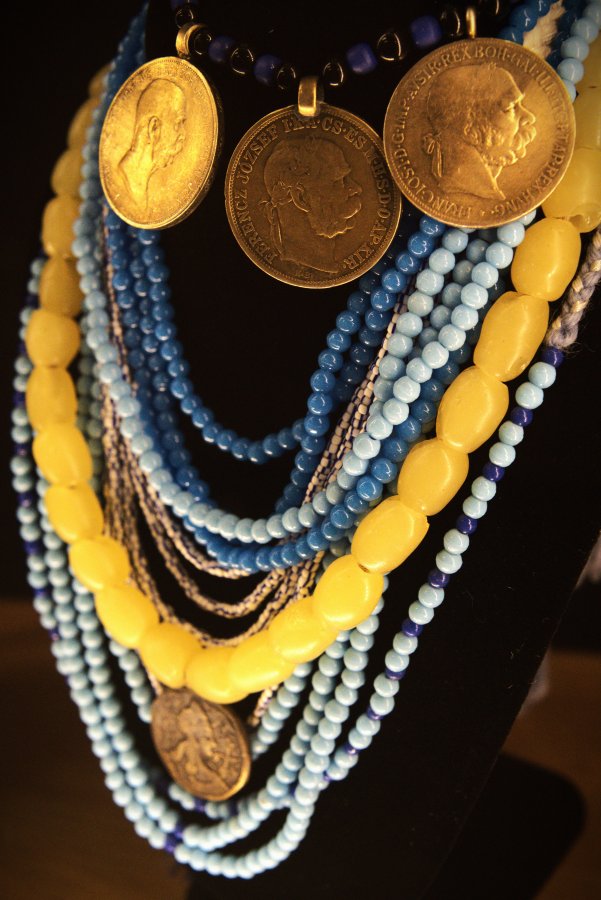
Genuine coral was expensive.
To imitate these organic gemstones, artisans used materials such as horn, smalt, glass and sealing wax.
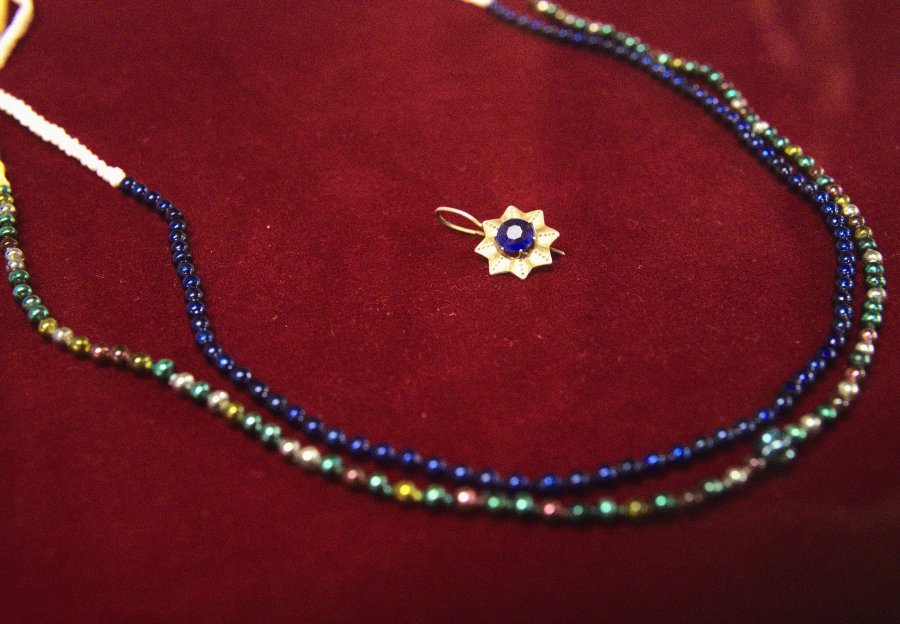
Blue and yellow beads, O. Berdnyk collection.
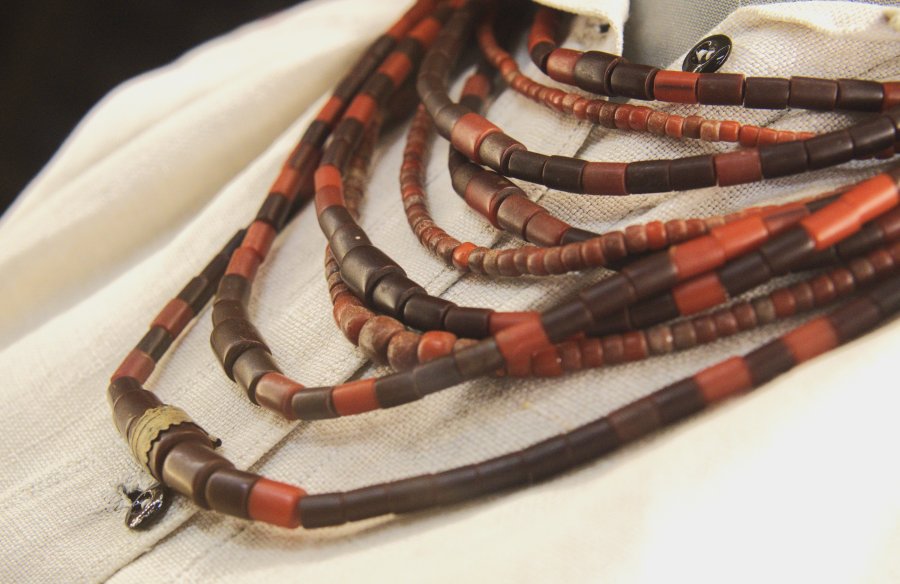
HORN NECKLACE
“Rohove namysto”, made from cattle horn, were lightweight, easily dyed and closely resembled coral in color and translucency.
Cattle horn necklace, O.Berdnyk collection.
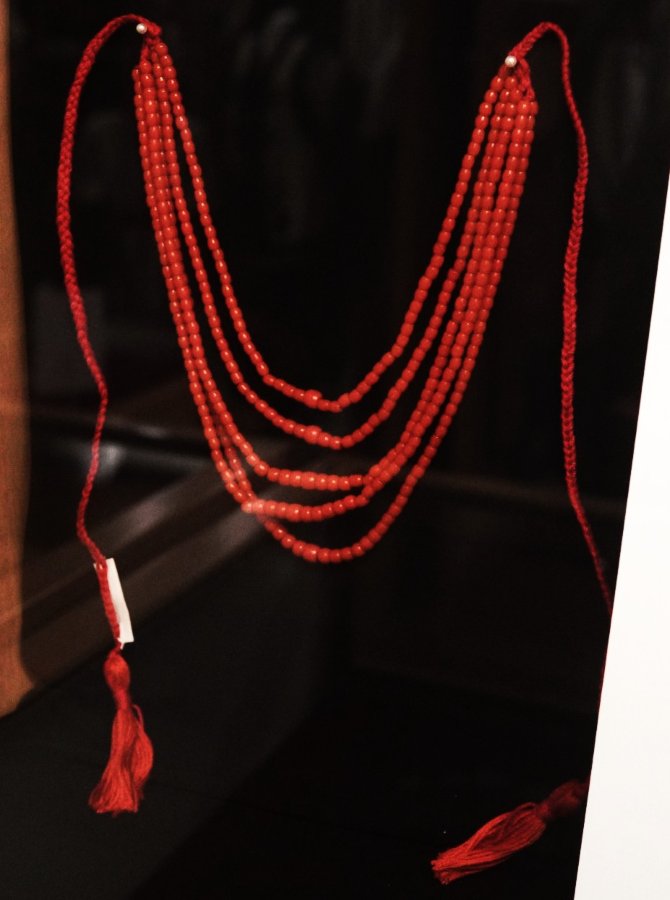
SMALT NECKLACES
“Kaminne namysto” or smalt necklaces were made from opaque coloured glass.
The glass was coloured with metal oxides such as cobalt, copper or iron during production to achieve shades from coral red to deep blue.
Smalt necklace, Ukrainian Museum of Canada, Manitoba Branch collection.
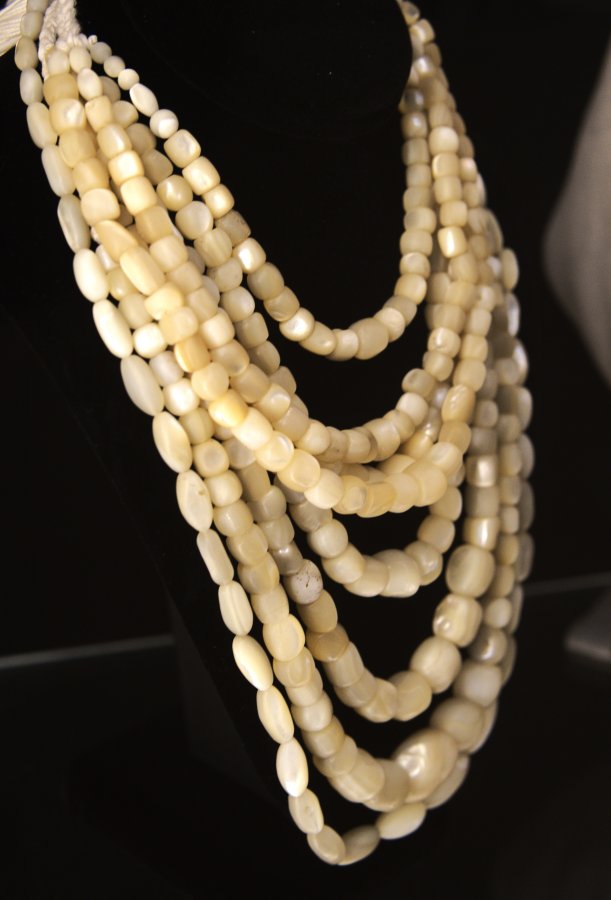
BALAMUTY
Balamuty are necklaces made of beads carved from fossilized mother-of-pearl, the inner layer of shells of freshwater and marine mollusks.
Balamuty often functioned as bridal necklaces and were worn alone or layered with coral and Venetian beads.
These yellowish beads most likely originated in the Middle East.
Balamuty, Eastern Podillia, Kirovohrad Oblast, late 19th-early 20th c. O. Berdnyk collection.
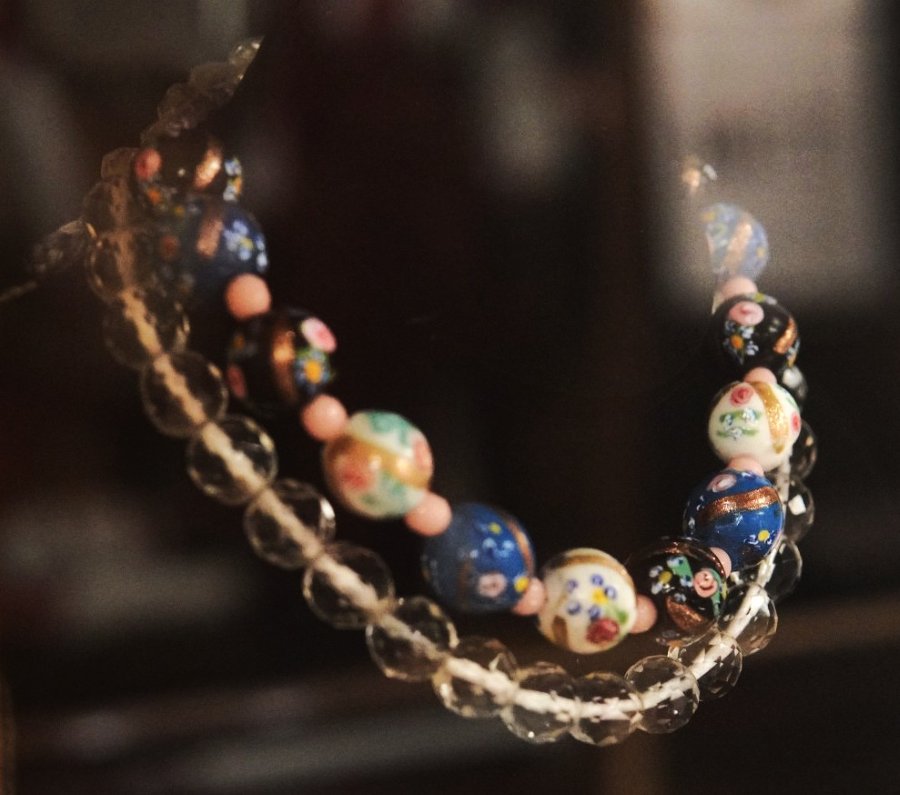
VENETIAN BEADS
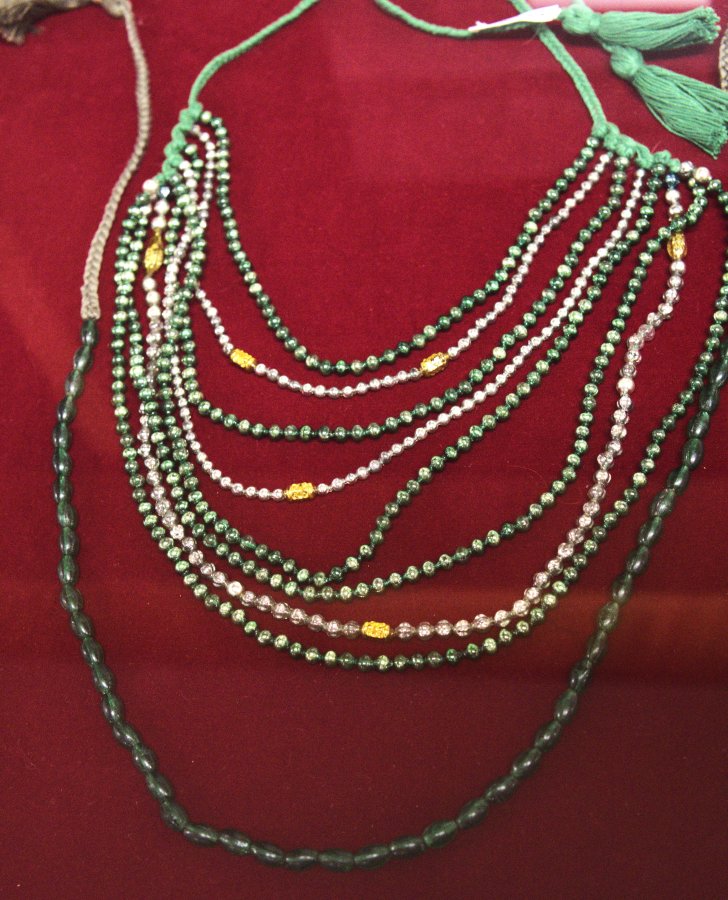
Expensive Venetian trade beads were made from Murano glass and imported to Ukraine from Venice via trade routes that passed through Halychyna.
These glass beads were painted with coloured pigments and often inlaid with gold.
Ukrainian Museum of Canada, Manitoba Branch, collection.
DELICATE LUSKAVKY
Luskavky were delicate hollow glass bead necklaces first appearing in Western Ukraine in the late 19th century. They were imported from Czech lands and later reproduced elsewhere. Due to their extremely thin glass construction, few complete examples of Luskavky have survived.
Left: Luskavky. Right: Luskavky, UMC, Manitoba Branch collection.
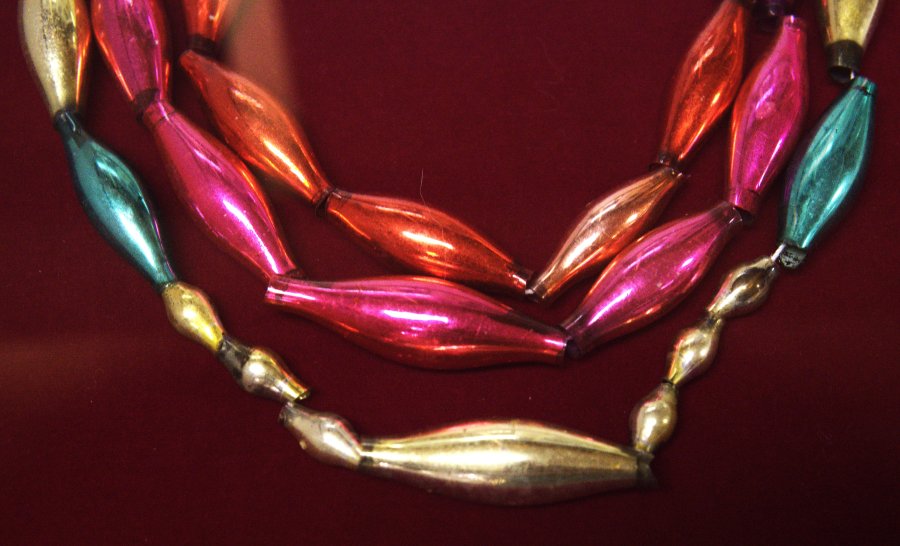
Similar beads produced in Ukraine, during the Soviet period, were more durable and were often used in creating garlands.
Many people remember them as Christmas tree decorations.
Luskavky, Soviet era, O.Berdnyk collection.
SNAKE NECKLACE-HADYUCHE NAMYSTO
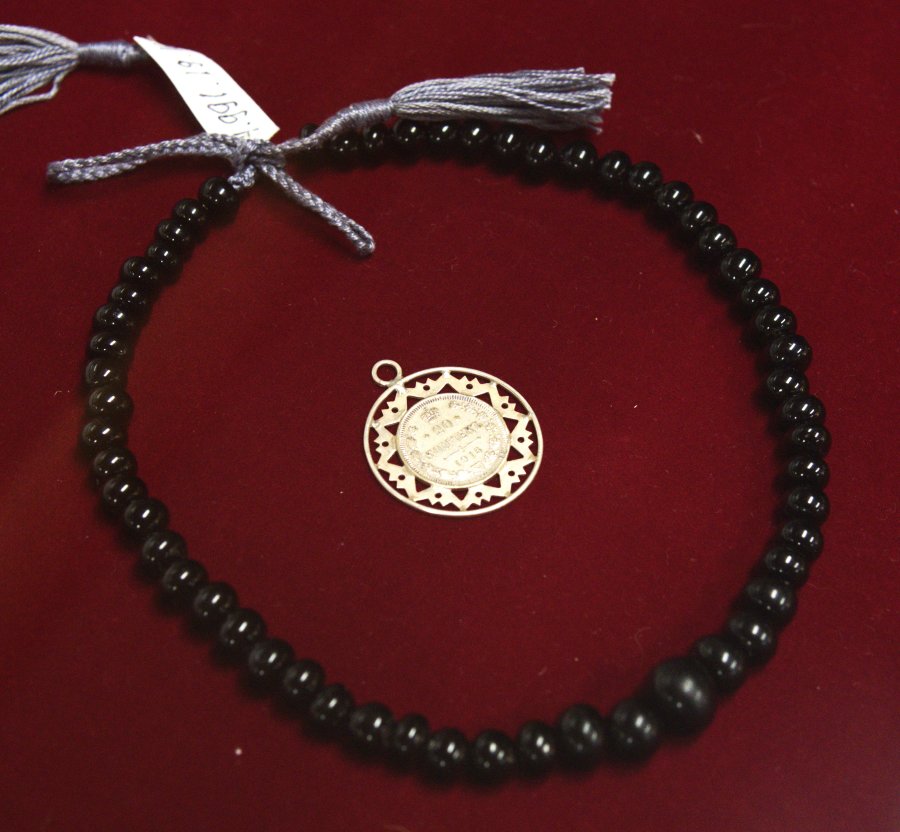
A snake necklace is a traditional dark, nearly black hand blown glass necklace “hutne sklo”.
Worn throughout Ukraine, it was especially associated with production centres in Podilla and Poltavshchyna.
Hand blown glass necklace, UMC, Manitoba Branch, collection.
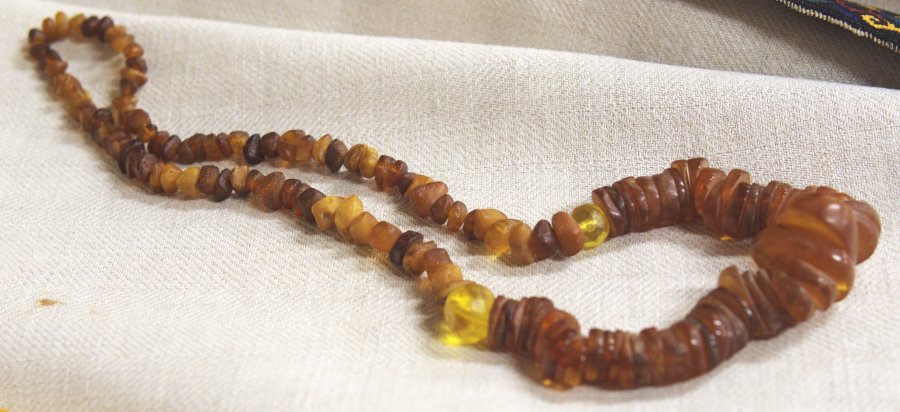
AMBER
Amber, “Burshtyn” necklaces were typically worn beneath coral or smalt necklaces as a framing layer.
Amber necklace O. Berdnyk collection.
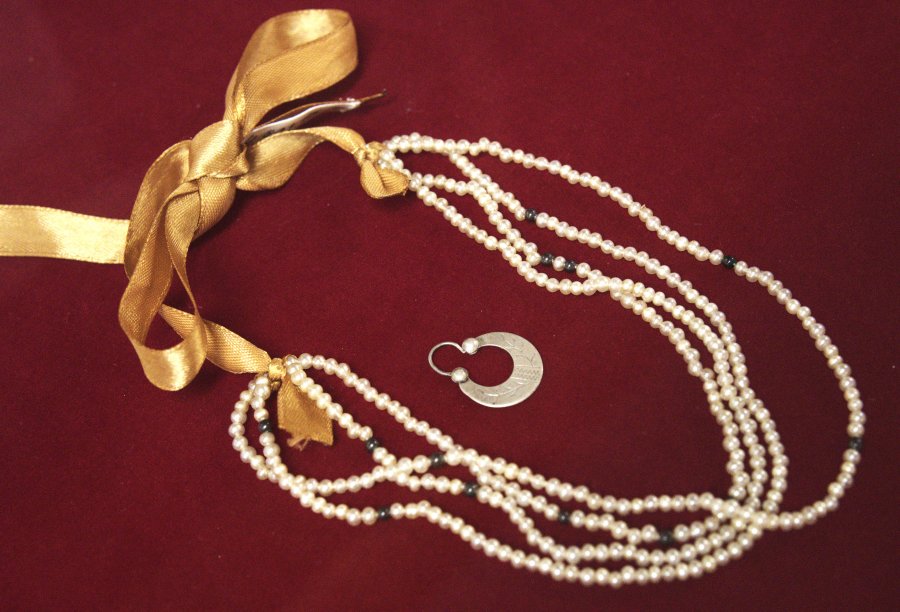
PEARLS, CRYSTALS AND OTHER MATERIALS
Necklaces made of pearls and garnets were popular among nobility and urban upper classes during the 17th-18th centuries.
Crystal bead necklaces, also worn in Ukraine, were admired for their clarity and brilliance.
UMC, Manitoba Branch collection.
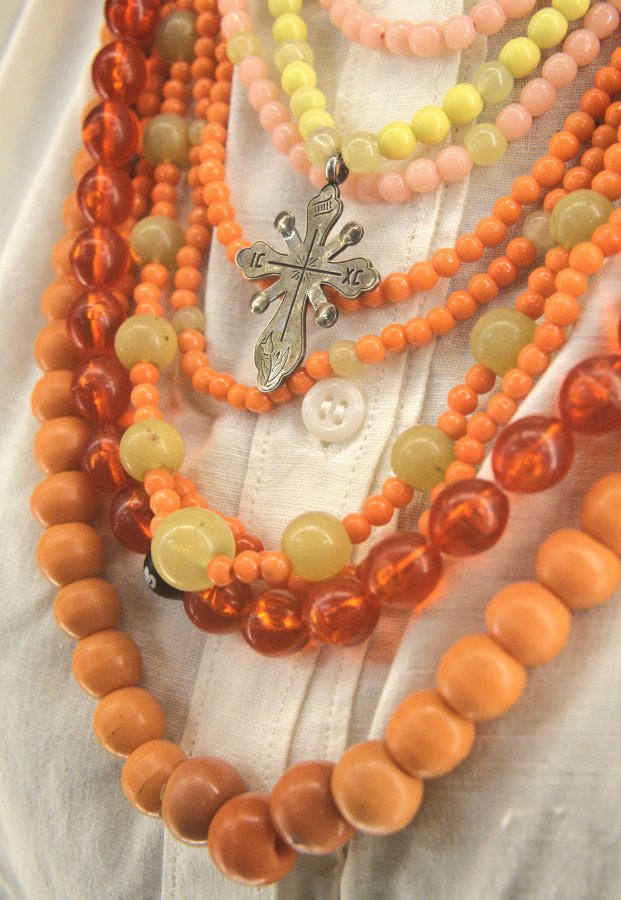
By the late 19th and early 20th centuries, new materials such as rubber beads and early plastics ( e.g. Bakelite) expanded the range of affordable adornments.
Today, these items are valued for both cultural and collectible significance.
O. Berdnyk collection.
UKRAINIAN BEADWORK
By the 19th century, seed beads were widely used in Ukrainian apparel.
Women decorated “sorochky”- shirts, “zapasky” – aprons, “obhortky” – wrap garments, vests, belts and headdresses.
Headdress, UMC, Manitoba Branch, collection.
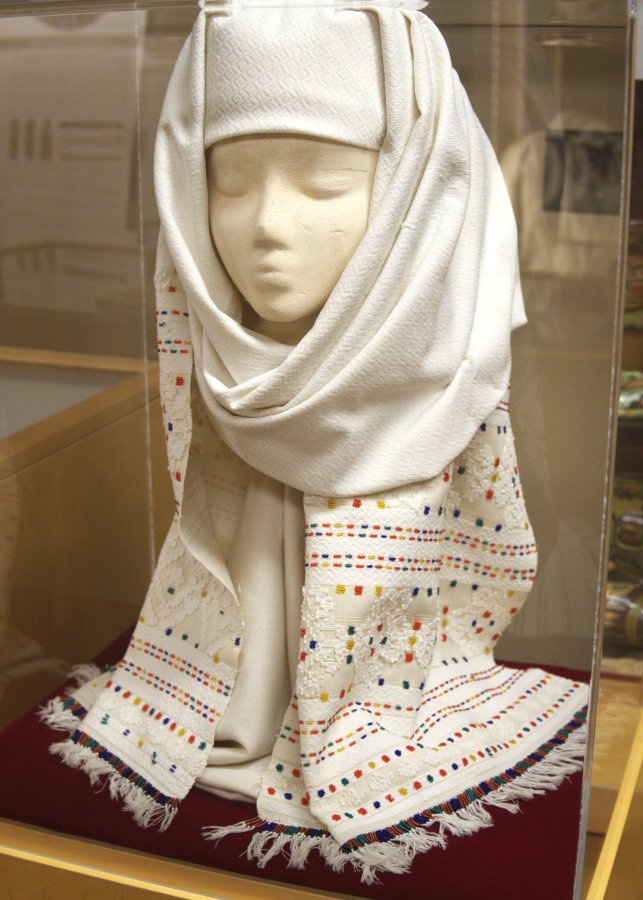
It is important to note that alongside common features, each village developed distinctive beadwork patterns.
Based on the presence and appearance of beaded adornments such as gerdany and sylianky, together with other elements of traditional dress in the 19th century, it was possible to identify not only the ethnographic region a person came from but sometimes even a specific village.
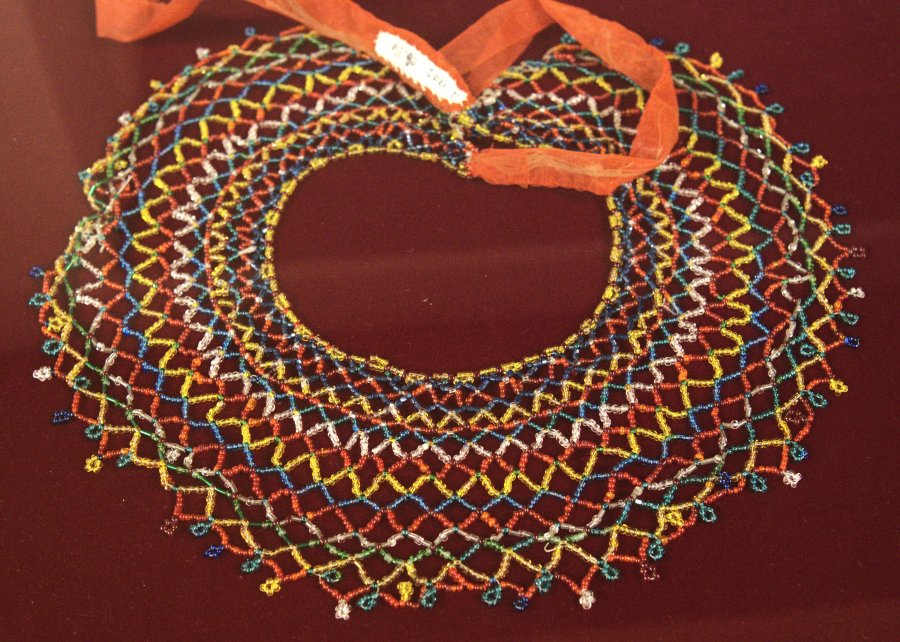
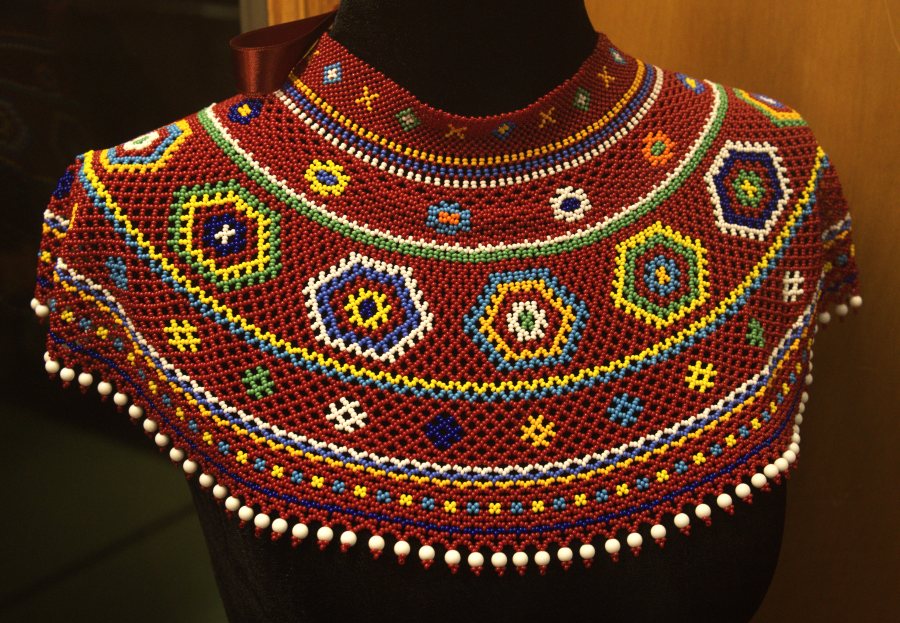
CHEST ADORNMENTS
This group includes: gerdan, sylianky, komir (both kryza and kryvulka).
Left: komir. Right: kryvulka, UMC, Manitoba Branch, collection.
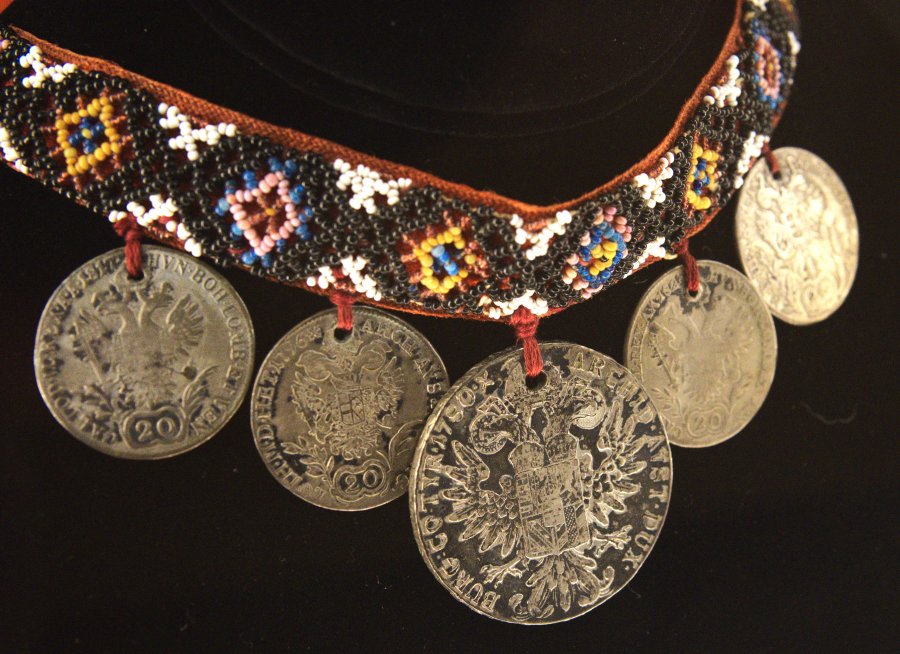
RIBBON AND PENDANT NECK FORMS
This group includes various types of gerdany.
UMC, Manitoba Branch, collection.
OTHER DECORATIVE ELEMENTS
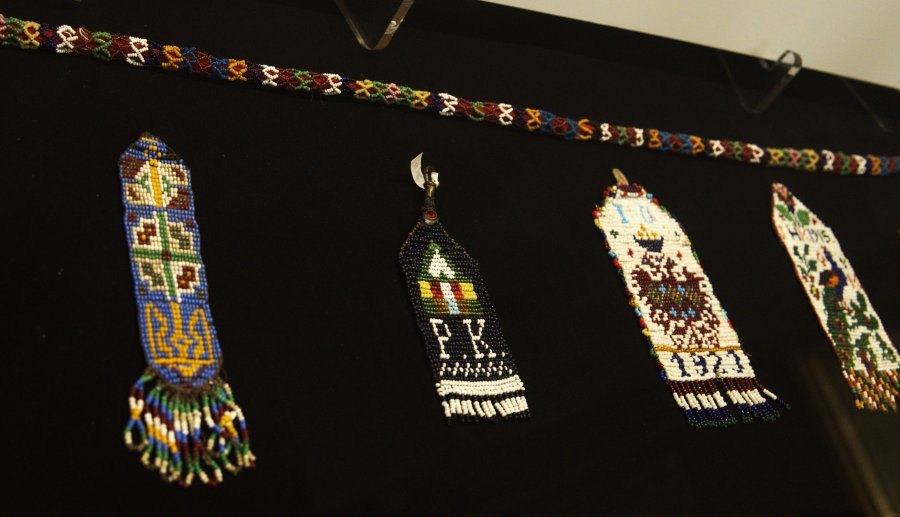
This group includes cotillion, pletinka and kravatka-man’s tie.
The cotillion held special cultural meaning. It was linked to Easter customs, when during the cotillion dance a girl would pin the cotillion to a man’s chest as a sign of affection. In the 20th century, beaded cotillions with national symbols were used as expressions of patriotism.
Cotillions UMC, Manitoba Branch, collection.
“Beaded adornments were believed to offer protection from negative influence, while also expressing beauty, a key element of Ukrainian culture.”
The preceding text is taken from the booklet produced for the exhibit by guest curator, Oleksandra Berdnyk.
Oleksandra is a Ukrainian newcomer to Canada who is experienced in appraising and restoring korali using traditional methods.
Supported by grants from the SUS Foundation, The Shevchenko Foundation, Steinbach Credit Union, and Sports, Culture, and Heritage, Oleksandra set about restoring much of our jewellery collection.
She is a collector and conservator of Ukrainian jewellery and has done restoration work for private collectors in Ukraine and Poland.
For centuries russia has attempted to erase Ukrainian culture and language.
Ukraine’s heroic fight for survival coincides with the Museum’s commitment to save Ukrainian culture and support artists while Ukraine is under attack by russia.
Since russia’s full-scale invasion of Ukraine in 2022, Ukrainians at home and in the diaspora, have taken a closer look at traditional Ukrainian apparel.
This has prompted the wearing of Vyshyvanka on a regular basis and redesigning traditional Ukrainian jewellery into contemporary designs.
Acknowledgements
Online References:
- Ivan Honchar Museum: https://honchar.org.ua/en
- Dukachi Info: https://ukrdec.blogspot.com/2020/01/dukaches-of-south-eastern.html
- Vskrynia: https://vskrynia.com.ua/
- Nation Project : https://kmk.rent/nation-project/
Exhibit Photography and Web Development:
- Ryan Zaluski at Web Design RZ.
Thank you for visiting our virtual exhibit!
Previous
Next